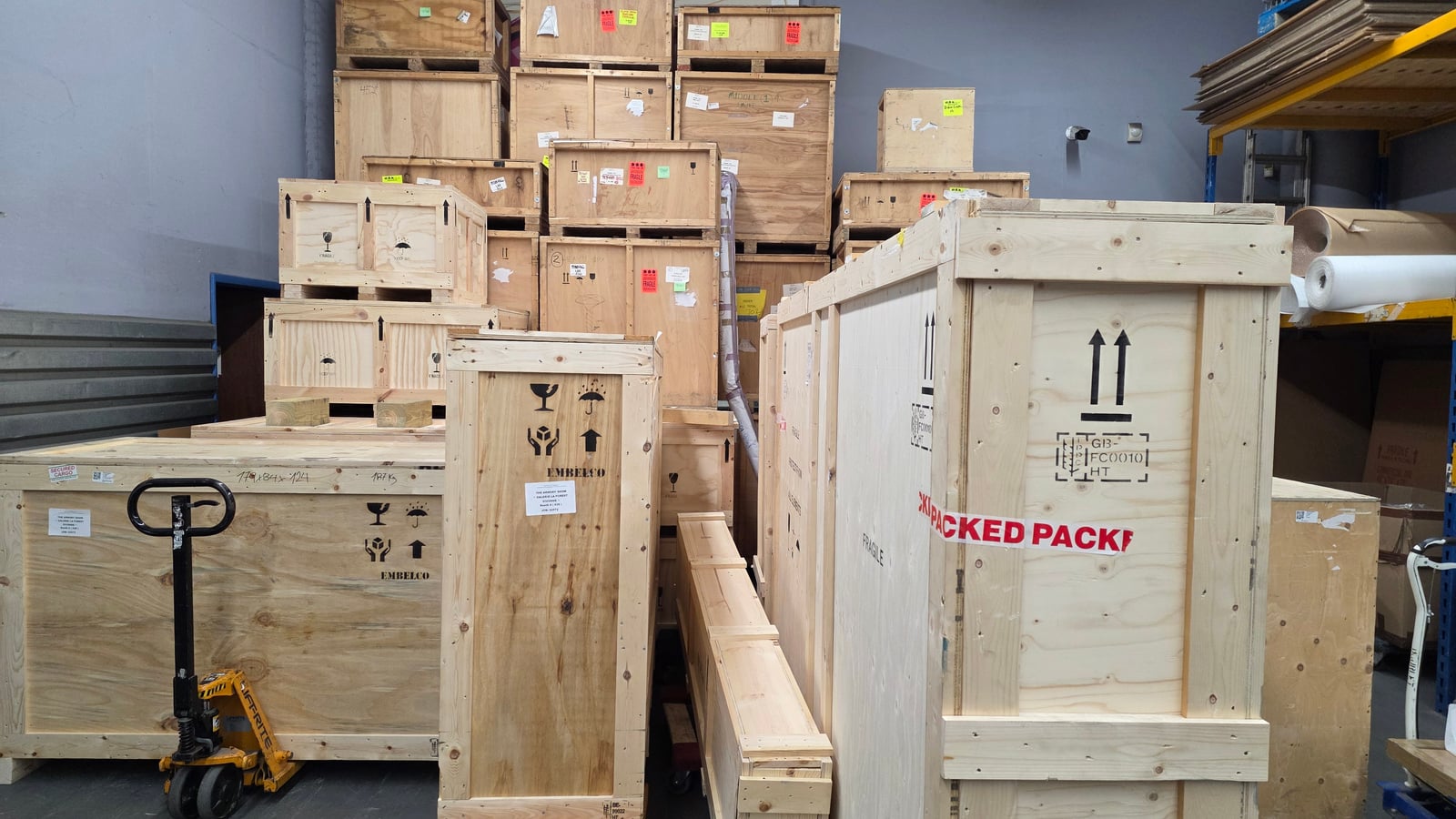
If you run a storage or moving company, look at the work that happens before and after a customer uses your space. Are they paying someone else to collect artwork, prepare crates, arrange deliveries, or manage an installation? There may be a business opportunity in those services, provided you can deliver them properly.
I have worked alongside fine art storage and logistics companies since 2006, developing the systems that support their operations. That experience has taught me to evaluate this market through the work involved, not the value of the objects.
A valuable painting does not automatically make a profitable job. The opportunity is to provide a service a customer needs, at a price that covers the care and responsibility it requires.
Where the additional revenue comes from
Consider a collector renovating a home. The project might involve collection, condition documentation, packing, several months of storage, and delivery once the renovation is complete. A company equipped to handle that work can earn revenue across the project rather than from storage alone.
The customer benefits from fewer arrangements to make and a clearer point of contact. For the provider, the potential benefits are a broader service relationship, repeat work, and less dependence on the storage fee alone.
But full-service logistics is not the only worthwhile model. Managed art storage can be a focused business in its own right. Collection, crating, transport, and installation are additional capabilities to evaluate, not compulsory stages of growth.
I would start with existing customers and inquiries. Which services are they requesting? Which jobs are you referring elsewhere? Is demand frequent enough to support trained staff and equipment, or would a specialist partnership make more sense?
For an example of how these services connect, read our account of the logistics behind TEFAF New York.
Check what your existing operation can support
Your premises, staff, and customer relationships may give you an advantage. Assess each one before treating it as ready for fine art.
For the building, I would commission a review of loading access, fire protection, water exposure, security, environmental control, and the layout of receiving, packing, and storage areas. Installing a partition does not address problems with the roof, plumbing, or the wider building.
Environmental requirements need particular care. There is no single temperature and humidity setting suitable for every collection. Agree appropriate conditions with qualified conservation and building specialists, then establish monitoring and a response procedure. Our guide to climate control for fine art storage explains that process.
Staffing also changes. Receiving an artwork, inspecting it, assigning a location, retrieving it, and authorizing its release is a different service from renting a customer a locked unit. Budget for that work, including supervision and training.
I would appoint an experienced art-handling lead with authority to refuse an unsafe method or stop a job that needs specialist help. General moving experience is useful, but it should not be the only qualification you rely on.
Review insurance before expanding your promises
Before accepting artwork, explain the proposed operation to a broker experienced in fine art storage and logistics. Describe every activity, including subcontracted work.
One distinction matters immediately: insurance covering your legal liability is not the same as insurance covering physical loss of or damage to the artwork itself. Warehouse legal liability responds to covered legal responsibilities; it is not an unconditional guarantee that a client will receive the artwork's full value after any loss. ¹
Ask the broker to review the actual route through your business: collection, loading, transport, unpacking, storage, repacking, and installation. Confirm which stages and locations are covered, how values are established, and which limits, deductibles, exclusions, and security conditions apply.
Pay attention to the maximum value concentrated in one location or vehicle, not just the average value you handle. A new collection or busy delivery day can change the exposure considerably.
Have a lawyer review your service agreements alongside the insurance arrangements. Make responsibility for insurance, inspection limitations, release authorization, and claims procedures clear. Do not assume a customer's policy removes your own liability, or promise protection your policy does not provide.
Price the entire job, not just the occupied space
I would compare the proposed art service with what the same space, staff, and capital earn today.
Include environmental systems, maintenance, insurance, handling equipment, training, and administration. Then cost the work around each account: receiving appointments, photographs, inventory entry, client visits, retrievals, packing, dispatch, and billing.
Two customers using the same amount of space can create very different workloads. One may leave a collection untouched for a year. Another may request weekly releases and regular viewings.
Your rates should explain what the storage charge includes and what is billed separately. Estimates should also address waiting time, difficult access, special equipment, and changes to the agreed scope.
During the initial launch, compare estimated labor and materials with actual use. Review unbilled work as carefully as occupied space. A higher selling price is only useful when the additional revenue exceeds the additional cost.
Make accountability part of the service
For each artwork, I want the team to be able to answer four questions: what did we receive, what did we observe, where is it now, and who authorized the latest movement?
That requires consistent identification, useful condition records, precise locations, and documented handovers. Our guide to artwork condition reporting explains how photographs and observations support that record. Documentation provides evidence; it does not automatically establish liability or prevent damage.
Be explicit about inspection limits. If a sealed crate arrives and you do not open it, record the crate's external condition and state that its contents were not inspected. Do not let a standard form imply otherwise.
This is the operational detail our team works on in ArtWMS: connecting artwork records, condition information, locations, movements, and jobs. Software can make that information easier to maintain and retrieve. Staff still need to record the work accurately.
Start with a service you can deliver consistently
My preference would be a defined launch: specific services, clear acceptance criteria, trained staff, and suitable protection already in place.
You might offer managed art storage with an established transport partner. An experienced moving company might develop specialist collection and delivery without opening an art warehouse. Both are reasonable models if the work is properly organized and priced.
Review the early jobs before expanding. Were estimates accurate? Could staff find every object and its records? Were releases properly authorized? Did clients understand the charges?
Fine art logistics deserves consideration when there is identifiable demand and a credible plan to meet it. Expand because you understand the work and can deliver it reliably, not simply because the objects are valuable.
For the setup process, read How to Start a Fine Art Storage and Logistics Business.
About the author: Walter B. has worked with fine art storage and logistics businesses since 2006. His work on ArtWMS is shaped by collaboration with customers and the development team.
This article provides general business guidance. Obtain advice specific to your operation from qualified insurance, legal, conservation, and building professionals.
Source notes
Insurance: The distinction between warehouse legal liability and artwork coverage is supported by The Hartford's warehouse and logistics insurance guidance and Travelers' fine art insurance guidance. These are explanatory references, not recommendations of an insurer; individual policy terms control coverage.
Reader discussion
Discussion
No published comments yet.
A verified email is required, and comments are reviewed before publication. The discussion service loads only after you choose to join. See the ArtWMS Privacy Policy and FastComments Privacy Policy.