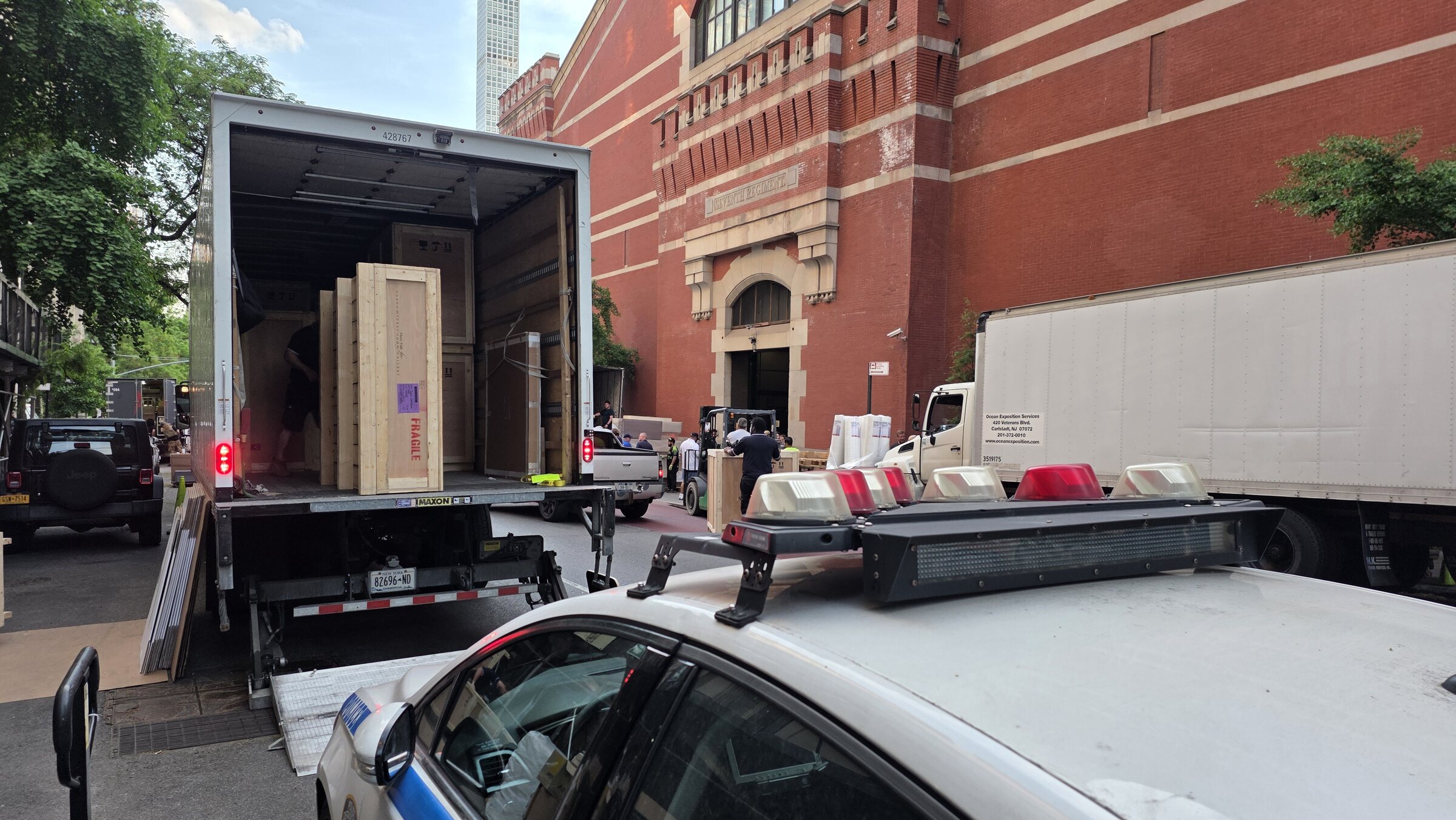
ArtWMS helps Bourlet Art Logistics prepare, track, and reconcile high-value art during a time-critical fair installation on Manhattan’s Upper East Side. This is the operation behind the finished stands.
By the time collectors entered TEFAF New York through the Park Avenue side of the Armory, the hardest part of the fair had already been happening out of sight.
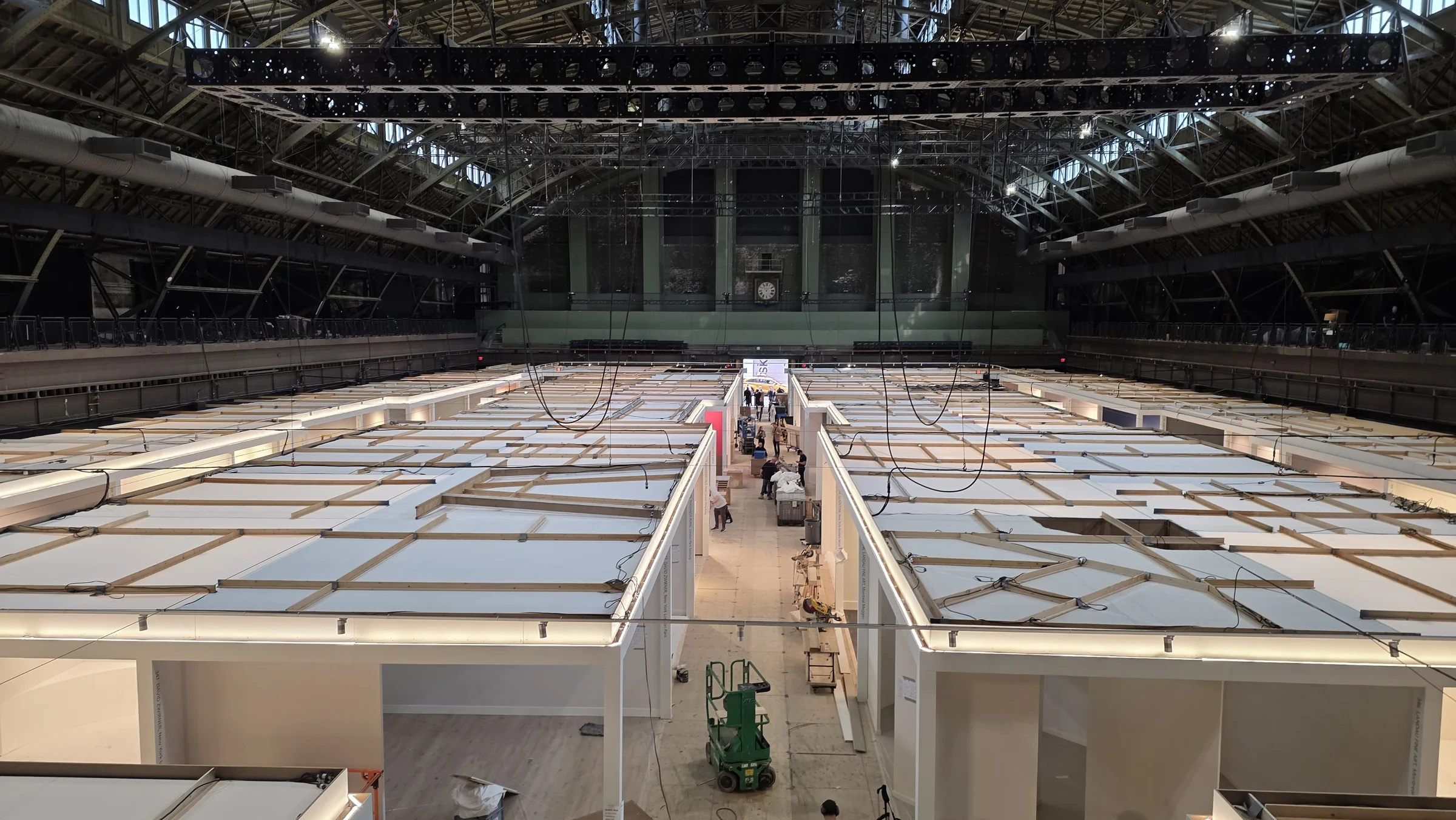
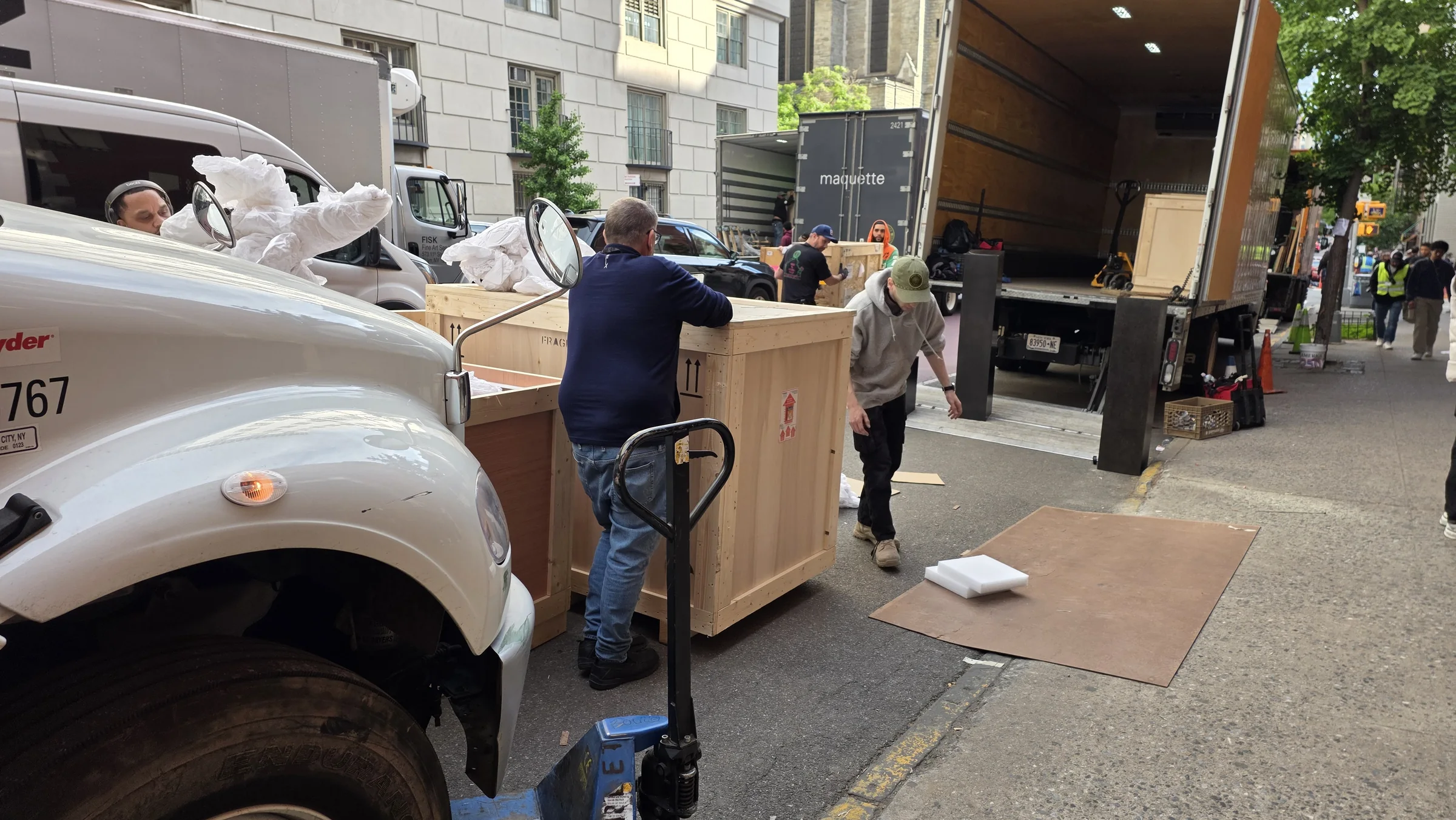
Around the building on Lexington Avenue, trucks waited at the service entrance. Wooden crates stood on liftgates and sidewalks. Handlers moved between crews, gallery stands, and temporary staging areas while traffic continued only a few feet away. Inside, a historic drill hall was being turned into a precise grid of exhibition spaces on a fixed clock.
The challenge is not simply moving many objects. Hundreds of people are preparing valuable and often irreplaceable works in the same building during a narrow installation window. Every crate arriving at the service entrance needs a known identity, recorded condition, intended stand, packing relationship, and next action. ArtWMS keeps those details connected from warehouse preparation through the return movement.
The installation starts three months before the first truck
Fast installation is rarely the result of moving faster on the final day. It comes from preparing earlier.
For ArtWMS customers supporting a major art fair, the operation can begin about three months in advance. The team creates a job and work orders for the objects intended for the fair, then organizes the information that will be needed when the pace accelerates: the client and contacts, required dates, collection and delivery instructions, planned destinations, and the inventory assigned to each movement.
The artwork record carries the details that help a handler make the next decision without guessing. Depending on the object, that can include the system or customer identifier, artist, title, year, material, dimensions, estimated weight, value, photographs, documents, fragile status, special-handling instructions, and recorded condition. Staff search before creating a new item so that an existing artwork keeps one continuous record rather than acquiring a second identity for the fair.
Packing is prepared with the same discipline. ArtWMS connects the artwork to its crate or soft pack and can record useful crate details such as dimensions, estimated weight, packer, type, and seal number. The digital crate contents need to agree with the physical packing. That relationship becomes especially important when the artwork and its empty packing take different routes during the show.
Before loading, the works are brought to a temporary ArtWMS location named for TEFAF near the warehouse loading dock. The location may be temporary, but it has a practical purpose: it turns a physical staging area into a shared digital checkpoint.
The team then performs a final location audit on mobile devices. Staff scan the temporary location first, then scan every item or crate physically present. They compare the identity and count on the device with what the work order says should be there. An unknown object, unreadable label, unexpected location, or packing mismatch becomes an exception to resolve before the next movement—not a reason to create a duplicate record and continue.
This is also a physical check. Staff confirm that every intended object is present, crates and soft packs show no newly observed problems, labels are readable, and each object is matched to the correct packing. If a QR code is damaged or difficult to reach, a replacement can be printed before the truck leaves.
The field kit was tested before it went to the fair
The mobile workflow depends on more than owning a scanner and printer. The equipment has to work together with the actual ArtWMS records and label format that staff will use in the field. Before deployment, the team tested the Honeywell handhelds, mobile printers, batteries, label stock, Bluetooth pairing, logins, and spare equipment.
A useful preflight test follows the complete loop: scan a known QR code, confirm that the correct ArtWMS item or crate appears, print a replacement label, compare its readable text with the record, and scan the new label back into ArtWMS. That last scan matters. A printer can produce a clean-looking label that still contains the wrong identifier, and a scanner beep confirms only that a code was read—not that it belongs to the object in front of the handler.
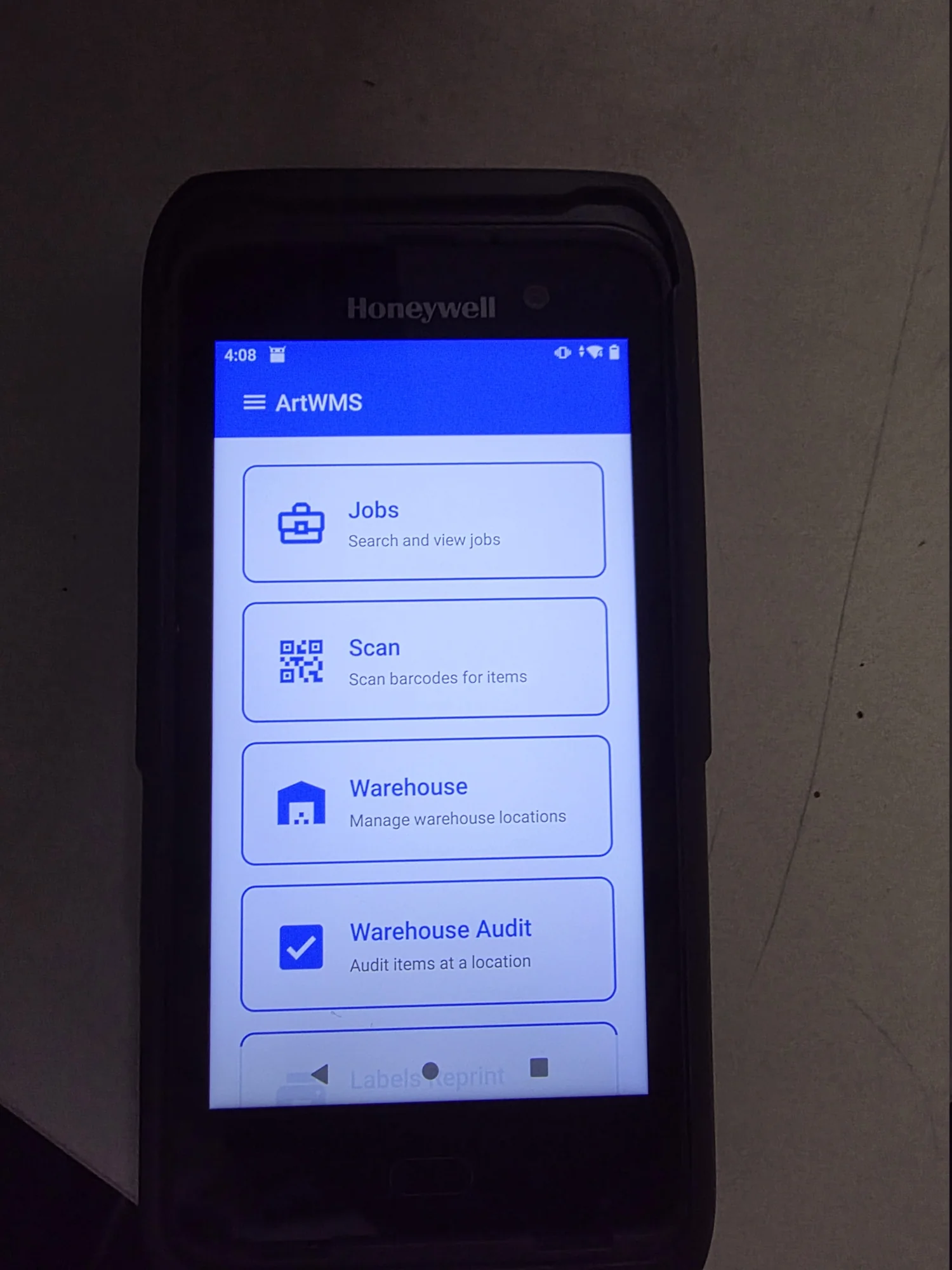
The handheld gives a field user direct access to the actions that have to happen beside the object: open the job, scan an item or crate, move inventory, audit a warehouse location, and reprint a label. Its long-range scanner is useful when a QR code is above eye level or on a crate that cannot easily be pulled out of a row. If scanning is impractical, the mobile workflow also provides controlled alternatives such as camera scanning or manual entry, but the operator still verifies the identity shown on the screen.
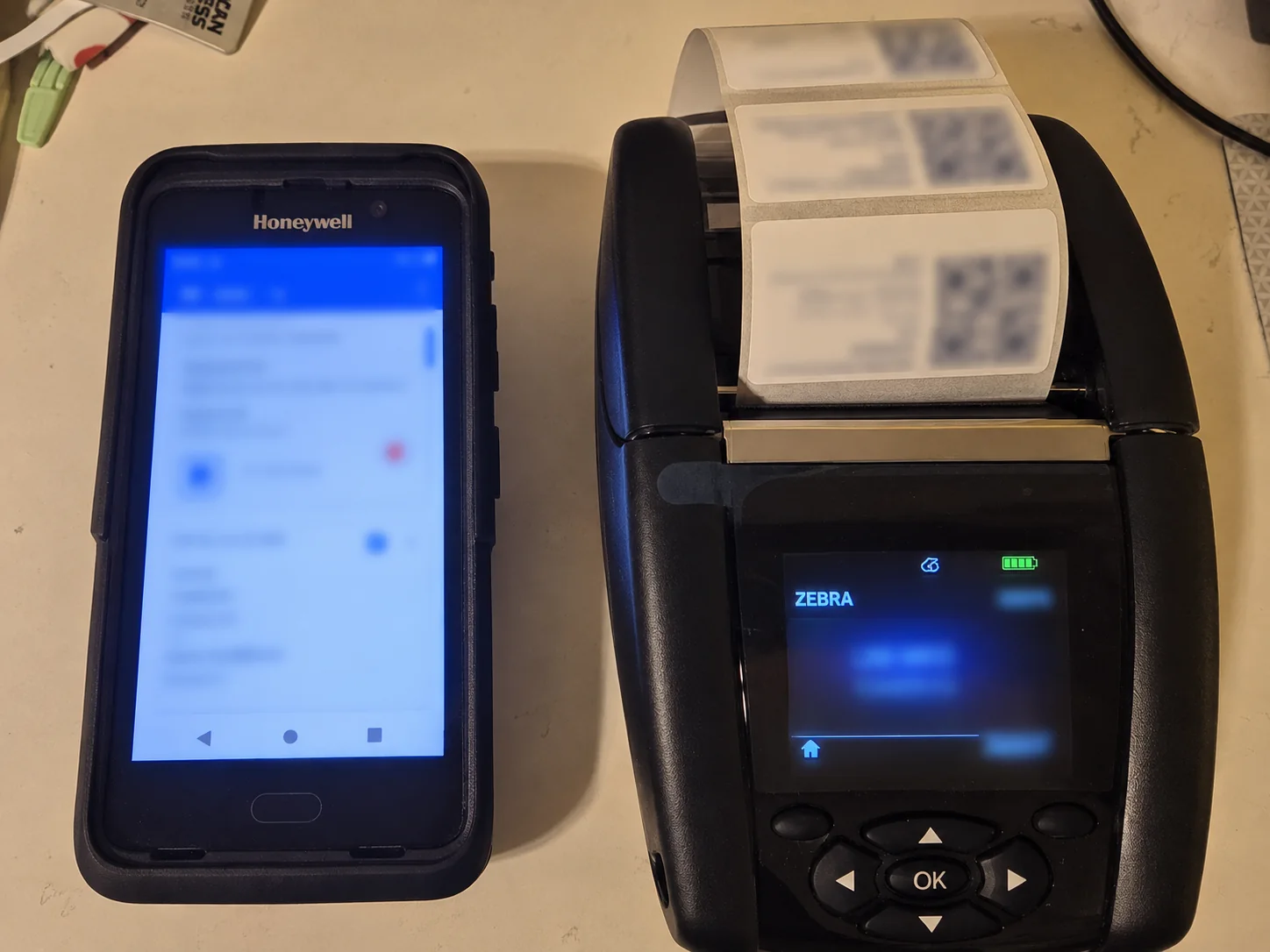
Testing a spare is as important as carrying one. A backup scanner that has not been charged or logged in, or a printer that has never been paired with the handheld, is not yet a working backup. The preflight turns the hardware, software, labels, and staff procedure into one usable field system.
Redundancy is not waste when the clock is running
A second label can look unnecessary in a quiet warehouse. It looks different when crates are staged tightly together and the only label is pressed against a wall.
The team may place duplicate QR labels on more than one accessible side of a crate. Both labels point to the same ArtWMS record; they do not create duplicate inventory. One label may face an aisle while another remains reachable after the crate is placed against a wall or blocked by other packing.
Staff carry long-range mobile scanners, and Bluetooth printers let them replace a damaged, missing, or unreadable item, crate, or location label where the work is happening. They verify the record on the screen and the readable text on the printed label before attaching it. If a device or printer is unavailable, a tested spare can take its place. Those small redundancies are based on experience, not theory.
Not every object gives a handler an obvious place for a label. A conventional adhesive label may be unsuitable for the artwork itself. Depending on the object and conservation requirements, staff may associate a two-by-three-inch label with an approved base, a tied tag, a hanging cord, a soft pack, or another part of the packing system. The judgment belongs to the experienced handler; the software’s job is to preserve the correct relationship between the identifier and the object.
One artwork, many physical states
The working route is longer than “warehouse to art fair.” A piece may pass through this sequence:
Warehouse → crate → truck → Armory receiving → gallery stand → outbound staging → truck → warehouse or client
At each meaningful handoff, scanning adds to the item’s operational chain of custody and location history. The history can show when a change was recorded, which ArtWMS user entered it, what action occurred, the source of the update, and the recorded location change. It helps answer practical questions: Where was the object last recorded? Which job and work order were involved? Which crate belongs with it? Who entered the latest movement?
A location audit provides a second form of control. Staff scan the location and the objects physically present, compare the result with the expected inventory, and investigate exceptions while the objects are still in front of them. Correcting a mismatch in the warehouse is much easier than discovering it after the truck reaches a crowded receiving area.
The empty-crate problem is not empty at all
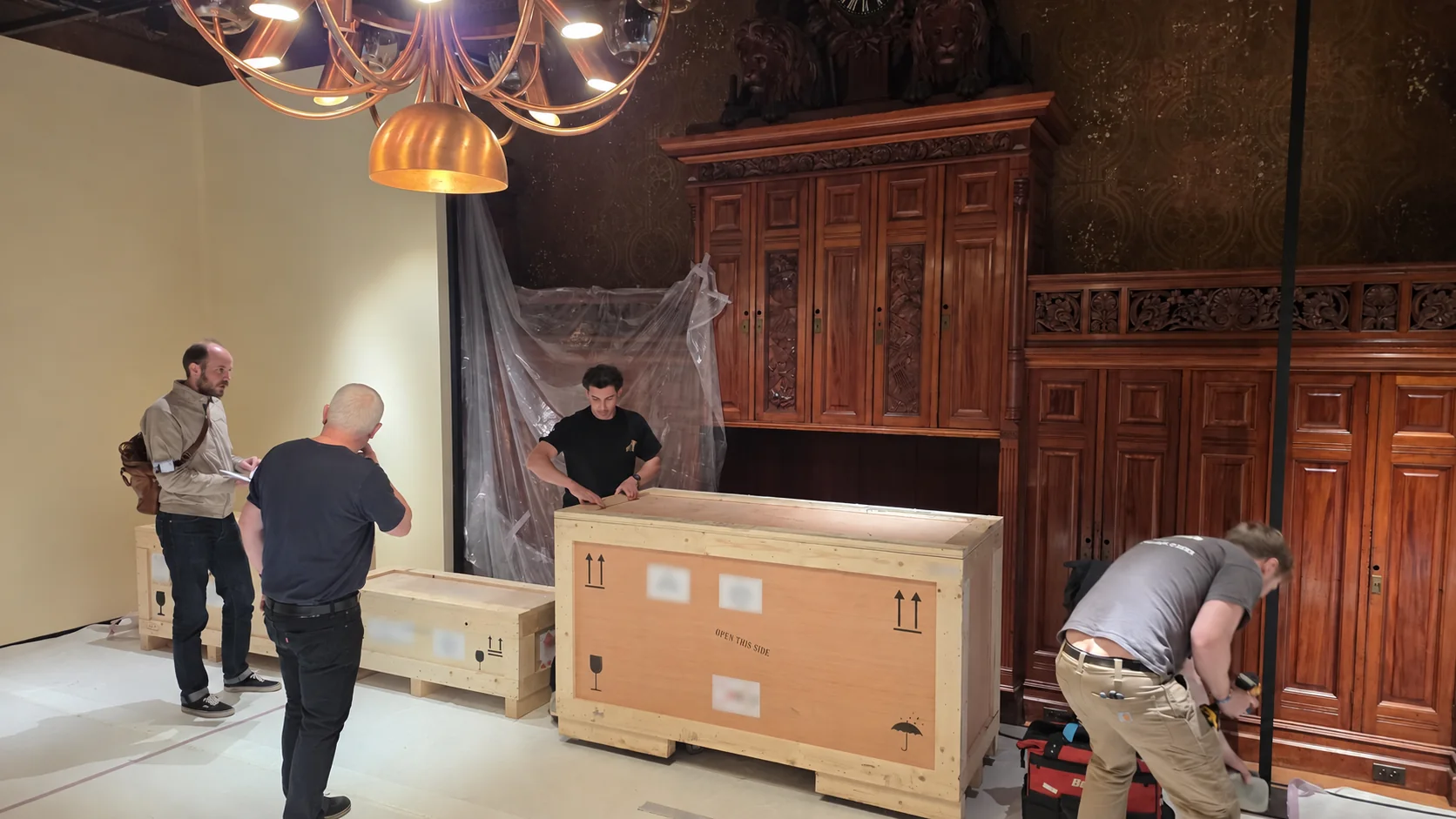
Once an artwork is installed, its crate and packing material do not disappear. The show floor cannot hold all of them, and in this kind of operation the packing can occupy roughly twice the volume of the artwork it protects.
That material must be identified, removed from the Armory, stored, and brought back for deinstallation. Empty crates may be nested inside one another to save warehouse space. That solves one problem and creates another: the team must still know which crate is inside which outer crate and which artwork each packing system belongs to when the fair closes.
This is where art-fair inventory management becomes more than a list of objects. Artwork and crate tracking has to preserve the relationship among the artwork, its crate, its packing, its temporary fair location, and the work order that moves it next.
Mobile for movement; a larger screen for detail
On the floor, staff need speed. A mobile scanner, paired with a Bluetooth printer, is the right setup for an audit, relocation, collection, loading check, or label reprint. The handler can scan the object, confirm the displayed identity and location, complete the movement, and remain focused on the physical work instead of returning to a desk.
Condition reporting begins before the object moves. Staff photograph the overall work and relevant details, record what they observe, and note special-handling facts without trying to diagnose a material or conservation issue. When another check is needed at staging, installation, deinstallation, or return, a new photograph can be compared with the earlier record.
The mobile device is useful for identifying the object, taking a field photograph, adding notes, and annotating a specific area while the artwork is present. Detailed review is different. A laptop or desktop gives a reviewer the space to compare several photographs, study a surface, read the full history, and inspect image annotations. Handling introduces risk; digital fine art condition reporting helps a team distinguish a condition that was already documented from a newly observed change.
The software preserves the evidence and makes comparison easier. A qualified person still decides whether a mark is new, whether movement should pause, and what action the condition requires.
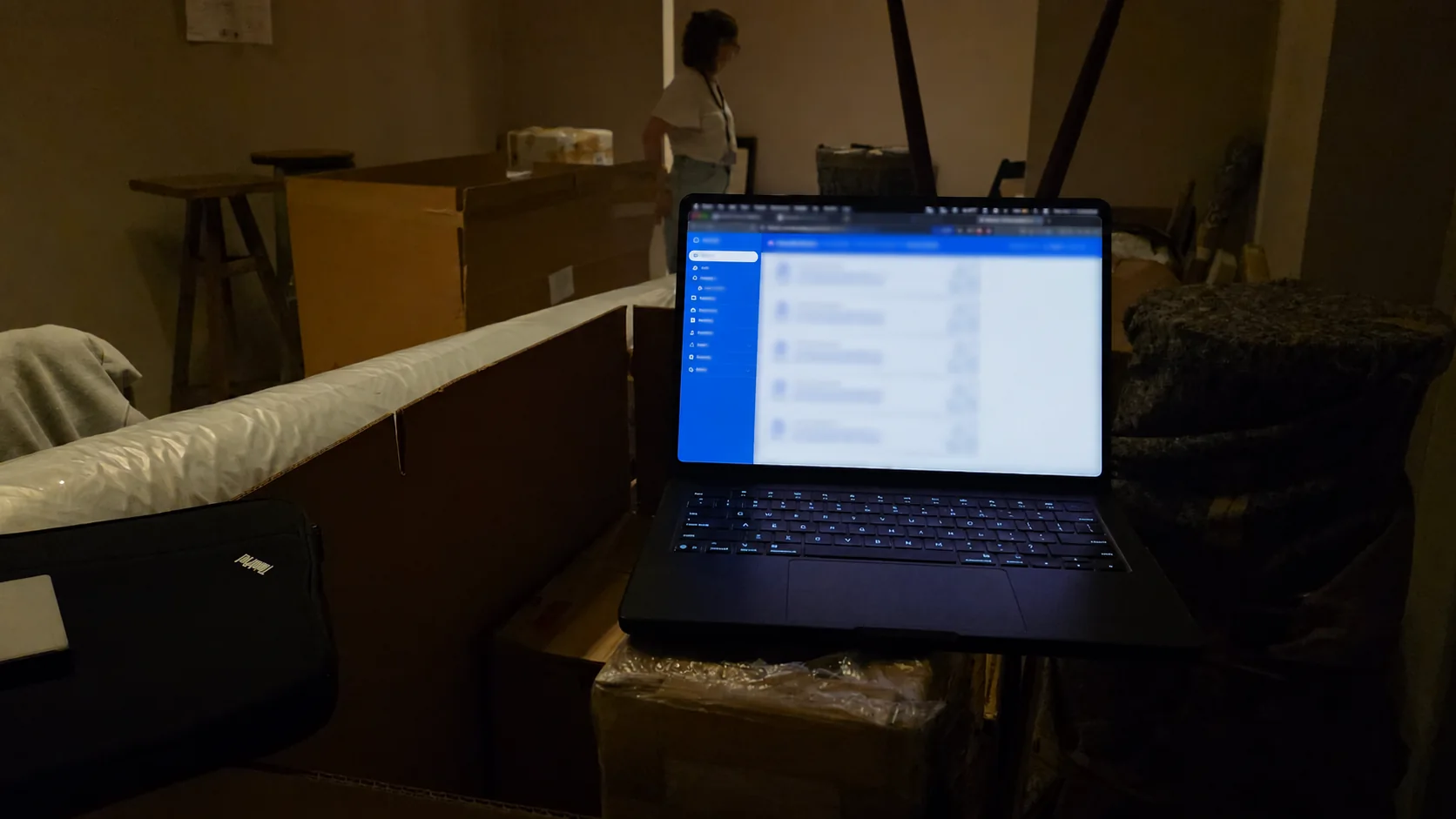
The two screen sizes serve different parts of the same record: fast capture and movement beside the object, followed by careful review when the detail demands it.
The human factor remains the center of the system
Software can reject an invalid entry, preserve a timestamp, or show the last recorded location. It cannot replace the judgment required to lift a sculpture, choose a conservation-safe label position, recognize a newly damaged pack, or decide that a condition photograph needs another angle.
The point is not to remove the person from the workflow. It is to give that person a clear item record, the right next action, and a reliable history while keeping the interaction simple enough to use under pressure. People remain responsible for what they accept and save.
Closing the fair means reversing the entire route
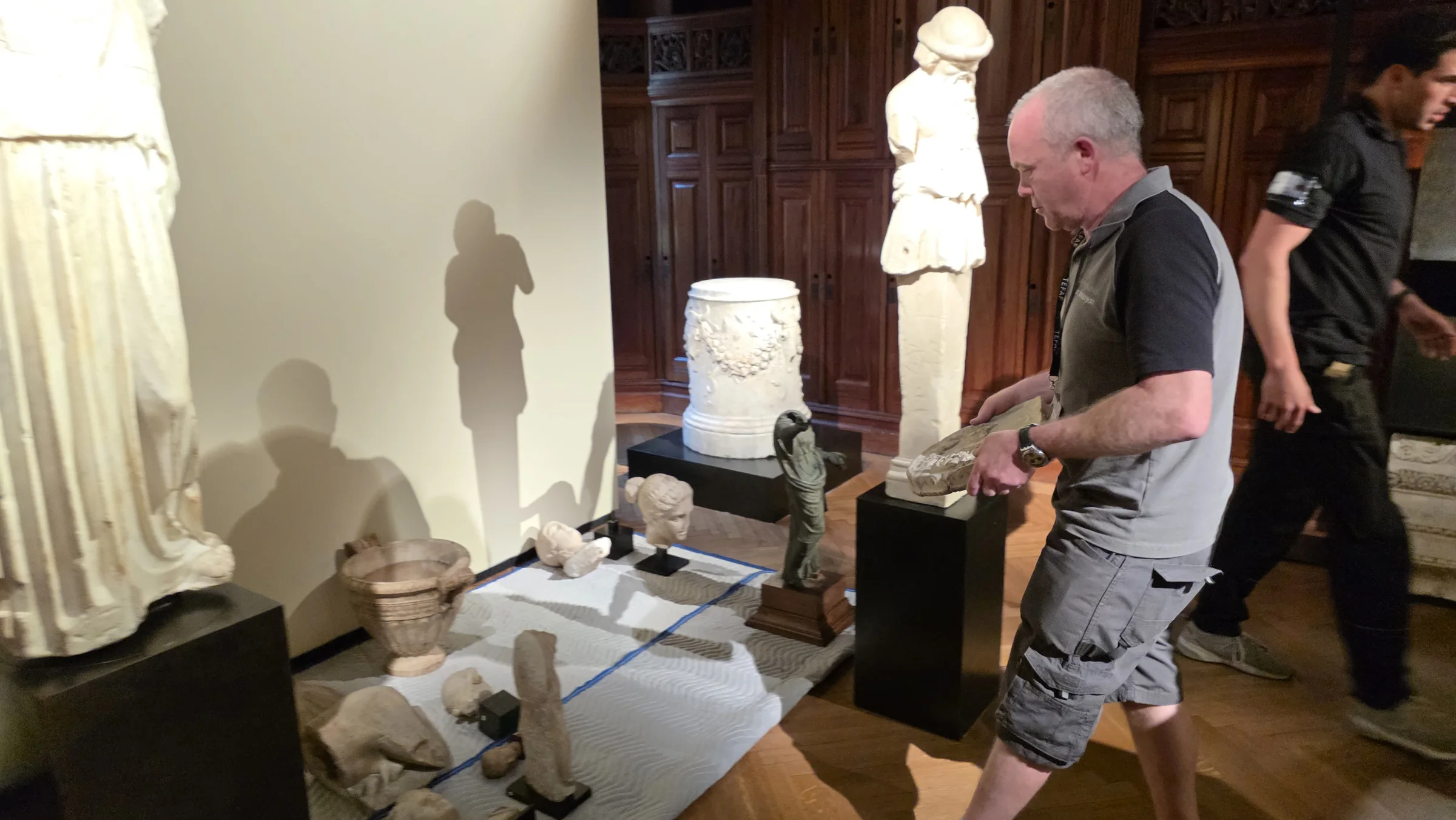
When the fair ends, the movement sequence runs in reverse—but not automatically. Packing has to return to the correct stand. The correct object has to meet the correct crate. The team checks the artwork identity, packing relationship, recorded condition, handling requirements, and next destination before the object leaves the stand.
As works move into outbound staging, staff scan the movement rather than relying on memory or a handwritten mark on a crate. The record can then follow the object to the truck and onward to its warehouse or client destination. At receiving, another scan confirms where the work entered the operation again. A final location audit makes remaining exceptions visible before the job is treated as complete.
This return sequence matters because the route does not always end where it began. One work may return to storage, another may go directly to a client, and a third may continue to another exhibition. ArtWMS keeps the destination in the work order and the movement in the item history so that deinstallation becomes a controlled logistics operation rather than a race to empty the stand.
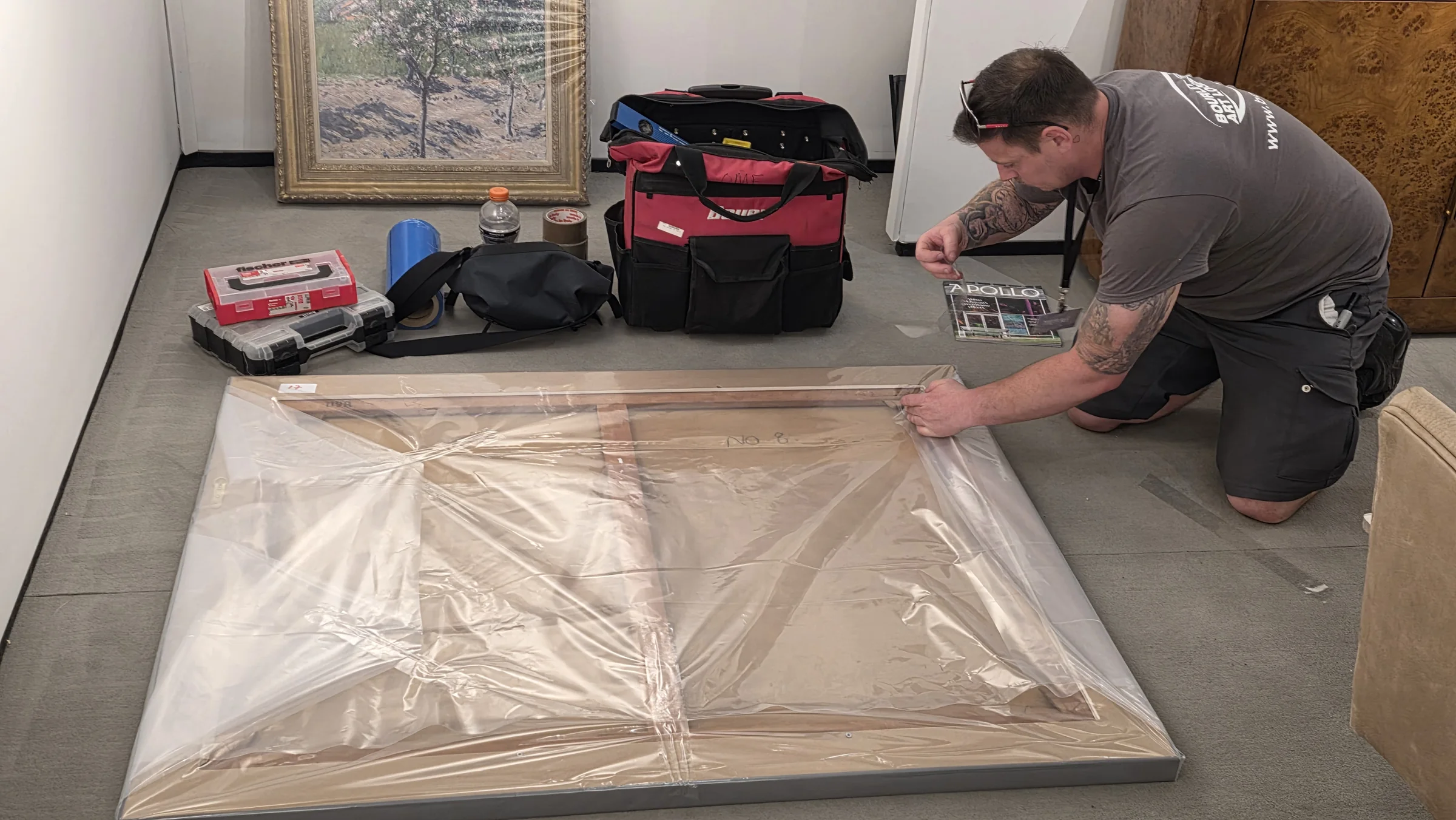
For the 2026 operation described here, the ArtWMS customer reported zero lost items and no deliveries to the wrong stand. That result reflects the standard the team works toward: every object accounted for, every handoff understandable, and every exception visible soon enough to correct.
Why the ArtWMS team was there
ArtWMS staff attended the operation for two reasons. The first was support: if a user had a question or an unusual situation appeared, the team could help while the work continued. The second was learning.
Software designed only in a conference room will miss the details that become obvious beside a truck or an open crate. A blocked label, an improvised staging zone, or a nested-crate problem can reveal more than a month of abstract discussion. The ArtWMS development team has worked with the art industry since 2004, and field observation remains part of how the product improves.
We may not know the history of every masterpiece passing through a warehouse. We do understand the work required to move it from A to Z—and why the software must respect the people doing that work.
What other art-logistics teams can take from this operation
The lesson from TEFAF is not that software removes risk. It is that preparation, clear identification, disciplined scanning, useful redundancy, and human judgment can work as one system.
In practice, that brought several ArtWMS capabilities into one continuous operation:
- Jobs and work orders organized the customer instructions, dates, destinations, and inventory required for each movement.
- Artwork and crate records connected an object to its identifiers, physical details, packing, handling requirements, documents, photographs, and condition information.
- QR scanning and mobile movement gave handlers a quick way to confirm identity and record relocation beside the object.
- Warehouse location audits compared what should be in a staging area with what staff could physically scan there.
- Mobile label printing replaced inaccessible or damaged QR labels without sending the handler back to an office.
- Condition reporting and image annotation preserved observations for comparison before, during, and after the fair.
- Inventory history kept the recorded actions, users, timestamps, jobs, work orders, and location changes connected to the item.
No single feature produces accuracy by itself. The value comes from using the same record from early preparation through staging, transport, installation, deinstallation, and final receiving.
For a fine-art logistics company preparing for a fair, loan, exhibition, or complex collection move, the practical questions are straightforward:
- Can every intended object be reconciled before loading?
- Can staff still identify a crate when its first label is blocked or damaged?
- Can an artwork, its packing, and its temporary locations be connected without relying on memory?
- Can field staff record movement quickly while specialists review condition details carefully?
- Can the team reconstruct the chain of custody when a client asks what happened?
Explore the fine art logistics software features, including artwork inventory and movement tracking, or request an ArtWMS demonstration for your own operation.
Reader discussion
Discussion
No published comments yet.
A verified email is required, and comments are reviewed before publication. The discussion service loads only after you choose to join. See the ArtWMS Privacy Policy and FastComments Privacy Policy.