About ArtWMS
The Story Behind ArtWMS
By Walter B.
One of the things I love about New York is the access to art. I enjoy visiting galleries, exhibitions and art fairs, discovering new work and meeting the people behind it. Our company is headquartered here, and over the years the art community has become part of my life as well as our business.
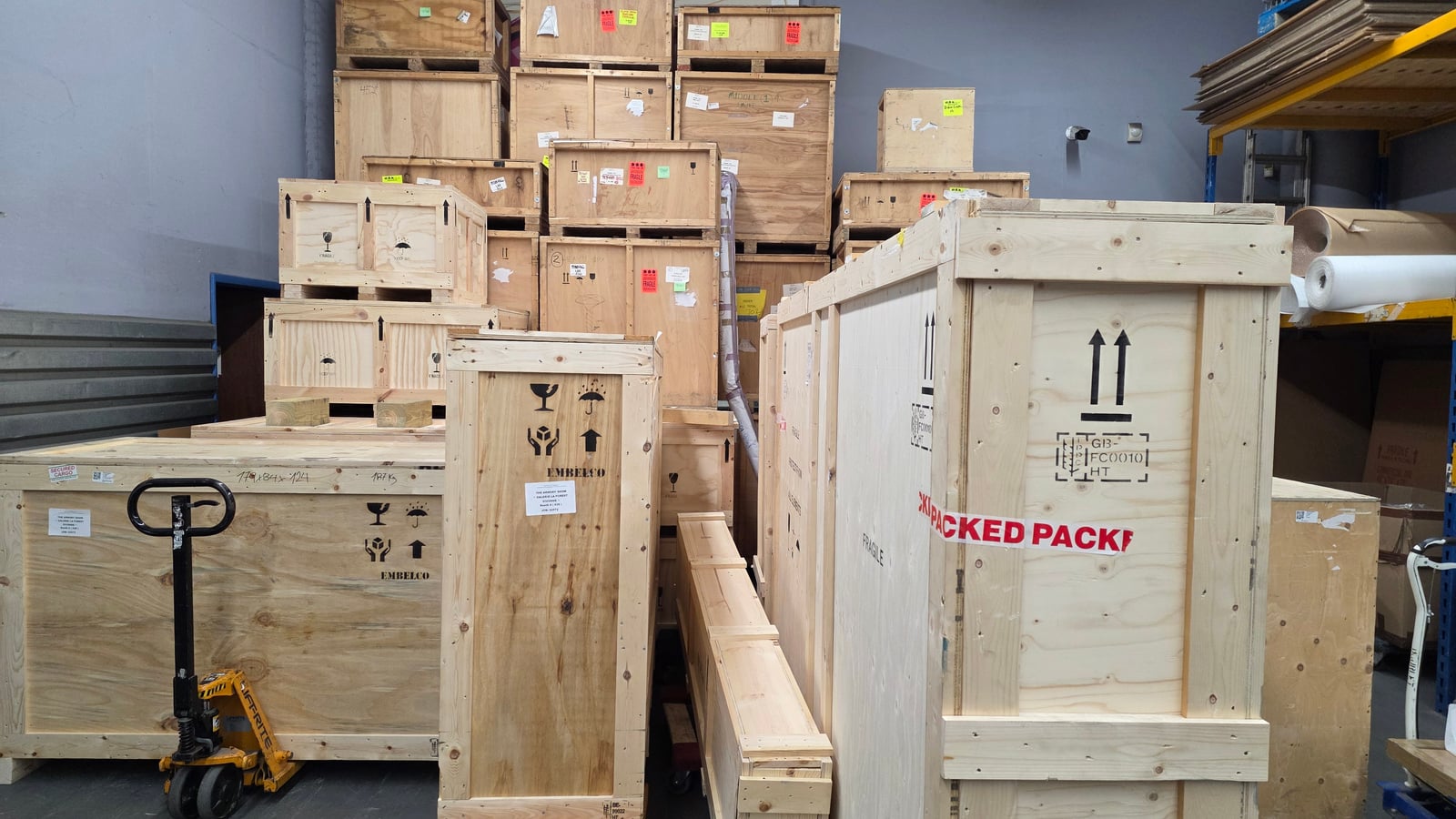
When I look at a painting, sculpture or installation, I’m also wondering how it got there. How was it moved? Where was it stored? What did it take to install it? I find myself thinking not only about the artist and the gallery, but also about all the people involved in getting that work into the room.
Where ArtWMS Started
In 2004, I founded New York Data Security, Inc., an IT consulting company specializing in data storage, encryption and custom software development.
Our team’s experience extends well beyond the art industry. We have developed software for large institutions and government use, including software supplied through a U.S. General Services Administration (GSA) contract. Organizing, protecting and making information reliable has been part of our work from the beginning.
We entered the art industry in 2006, when I met the owner of a large New York art storage and logistics company. His business had invested over $260k in software, but the system was not meeting its needs. He asked us to help.
We spent almost a year trying to improve the existing software before realizing that the problems went deeper than missing features. The underlying architecture, codebase and security did not give us the kind of foundation we felt comfortable building on.
Rather than continue trying to reshape software that had not been built around the way the company actually worked, we decided to start with a blank canvas and build something specifically for an art logistics business.
That became ArtWMS.
Learning the Business from the Inside
Building the software meant learning the business inside and out. Our developers worked with warehouse managers, art handlers, office staff and business owners to understand how information moves along with the artwork.
An employee receiving a piece needs to record its details and condition. Someone moving it needs to know exactly where it is and where it is going. An art handler packing it needs dimensions, handling notes and special instructions, without necessarily needing access to financial information. The office needs different information to answer a customer’s question, prepare customs documents or generate an invoice, while the owner needs a clear view of the entire operation.
Understanding who needs what information — and when they need it — became an important part of how we designed the system.
No Two Artworks Are Quite the Same
It is one thing to handle a 10-pound, multimillion-dollar painting measuring one by two meters. It is another thing entirely to move a Banksy mural preserved on a section of wall weighing approximately 7,500 pounds. Both are valuable works of art, but the logistics involved are completely different.
One may need an appropriate crate and a small, trained crew. The other may require a gantry crane, a crane truck, a custom support frame, a forklift and a larger specialist team, with someone coordinating the documentation, scheduling and insurance requirements.
ArtWMS helps keep all of that information connected — work orders, handling instructions, artwork records and supporting documents — so the people involved can see what they need to do their part of the job.
Understanding those day-to-day realities allowed us to give customers an alternative to Excel spreadsheets and disconnected workarounds: a fine art logistics and warehouse management system built around the way they actually operate.
Working with Our Customers
Today, our team handles development, testing, infrastructure, implementation and customer support. When a company joins ArtWMS, we help bring over its existing data, configure the system around its operation and train its employees. Once it goes live, we stay involved.
That ongoing relationship matters to us. We hear what works, what frustrates people and where even a small change could make someone’s job easier. Those conversations help shape what we improve and what we build next.
When a difficult question comes up, customers can speak with someone who knows their setup — over a call or, when practical, in person over a cup of coffee.
And if we meet for the first time, remind me about the coffee. That’s how I’ll know you actually read this article.
A Business Built on Trust
People build their reputations over many years, and relationships with artists, galleries, collectors and other logistics companies are at the heart of this industry.
When someone entrusts a company with an artwork, they want to know it will be looked after properly. They also expect clear answers when they ask where it is, what condition it arrived in or when it was last moved.
Our role is to help the people answering those questions.
Having an artwork’s location, photographs, condition reports and movement history in one place makes it much easier to provide an accurate answer without searching through separate records or relying on someone’s memory.
We have helped companies replace fragmented inventory records with clearer locations, traceable movements and more consistent record-keeping.
As of 2026, our customers use ArtWMS to manage artwork inventories valued collectively in the billions of dollars. We take the responsibility of supporting those operations seriously.
Accuracy and Ease of Use
For me, accuracy and ease of use belong together. Finding an item, recording a move or checking its condition should be straightforward enough to do while the work is happening, rather than something that gets put off until later.
The best system is one people actually use, and that means it has to fit naturally into the way they work.
I am proud of the care our team puts into ArtWMS and grateful to the customers who continue to help us make it better.