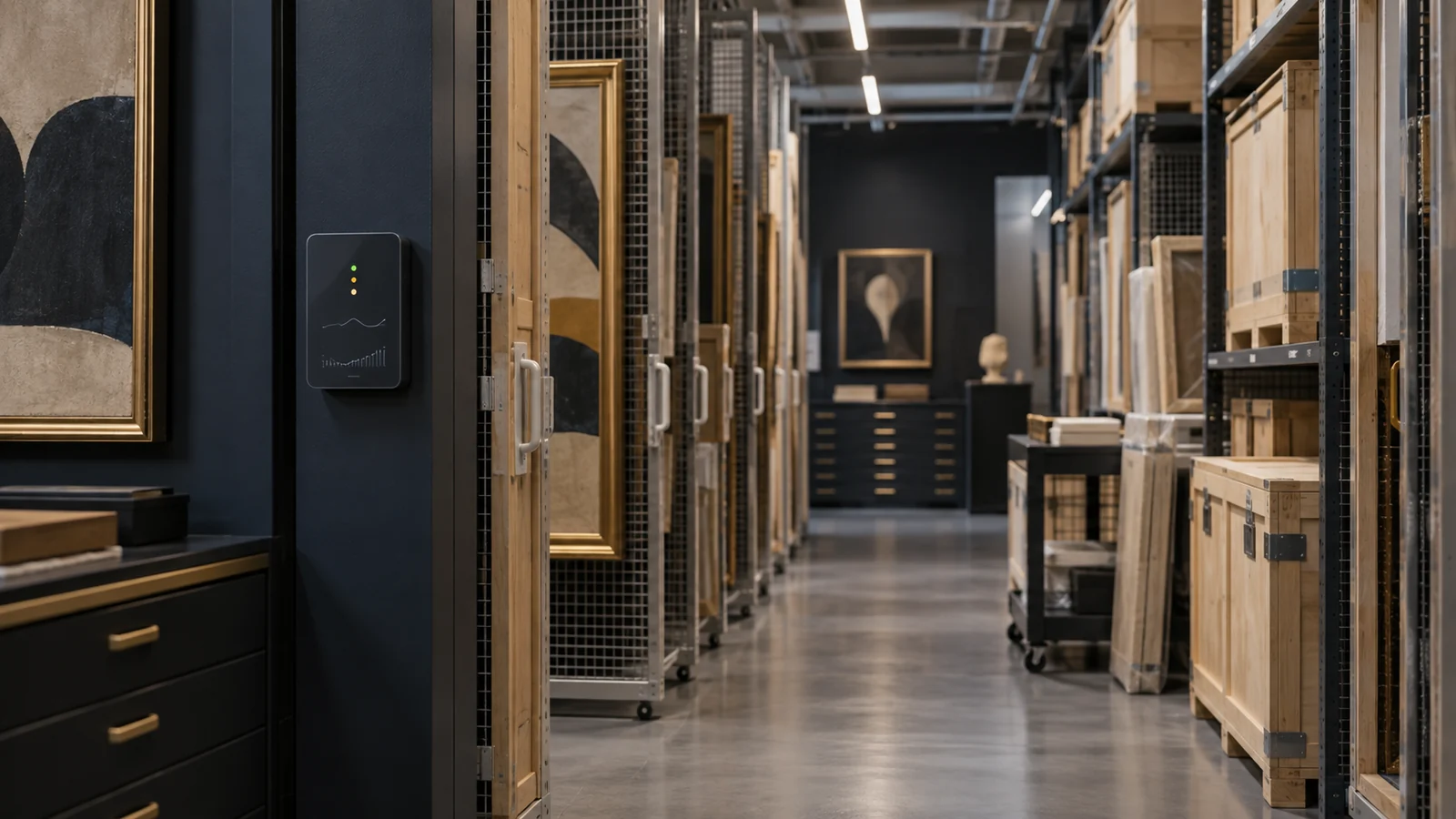
Fine-art storage does not have one temperature and relative-humidity setting that is correct for every object, building, and climate. A mixed collection can contain materials that respond differently to moisture, temperature, pollutants, light, and rapid change. The responsible starting point is therefore a documented decision process—not a universal table copied into every facility plan.
The Canadian Conservation Institute’s current Climate Guidelines use collection type, building capability, local climate, risk, sustainability, and institutional resources to shape environmental advice. That context-specific approach is more useful than presenting one narrow band as a guarantee of safety.
Start with the collection and its history
Identify the materials and vulnerabilities in each storage zone. Paintings on canvas, wooden panels, paper, photographs, metals, plastics, and composite objects do not all respond to the same risks in the same way. Existing loan agreements, conservator recommendations, known prior environments, and evidence of active deterioration should inform the brief.
Abrupt change can be damaging for some objects, but stability is not the only consideration. Prolonged high relative humidity can increase mould and corrosion risk; very dry conditions can affect some organic materials; temperature changes chemical reaction rates; and a cold surface can create local condensation even when a room average looks acceptable. The target must address the actual risk rather than optimize a single dashboard number.
Translate the conservation brief into operating limits
A qualified conservator and the building’s mechanical professional should turn collection needs into achievable operating limits. Document:
- the collection or material groups covered by each zone;
- the intended temperature and relative-humidity ranges and why they were chosen;
- acceptable short-term and seasonal variation;
- sensor locations, accuracy, logging interval, and calibration schedule;
- alert thresholds, delay rules, recipients, and escalation steps;
- what happens during maintenance, power loss, water events, or equipment failure; and
- who is authorized to change a setpoint or threshold.
Some collections or contracts may require a narrow range. Others may be managed safely with a broader, seasonally adjusted range. The decision and its evidence matter more than a number presented without context.
Monitor the environment the objects actually experience
A wall thermostat describes one location, not an entire room. Place sensors where they can represent storage conditions without being distorted by a supply vent, exterior door, direct sun, heater, cold wall, or other local source. Large or subdivided rooms may require more than one sensor. Compare zones before assuming they behave alike.
Continuous records are useful only when the equipment is maintained and the data is reviewed. Establish a calibration or comparison schedule, record device changes, preserve time-zone and clock consistency, and investigate missing or implausible readings. A chart with an unrecognized sensor failure is not reliable evidence of conditions.
Make alerts actionable
An alert should start a response, not merely send a notification. The procedure should tell the recipient how to confirm the reading, inspect the affected area, protect vulnerable objects if necessary, contact facilities or conservation staff, document the cause, and record the resolution.
Thresholds also need enough context to avoid constant false alarms. A warning threshold, a more serious escalation threshold, and an appropriate persistence delay can help distinguish a brief door opening from a developing mechanical problem. The correct values depend on the approved environmental brief.
Review patterns, not only excursions
Weekly, monthly, and seasonal review can reveal gradual drift, cycling, zones that recover slowly, and recurring events tied to loading, occupancy, or maintenance. Retain the relevant environmental record with the operational history so authorized staff can explain what was measured, where, with which device, and how the team responded.
ArtWMS can organize configured readings, alerts, and historical views for operational review. Those records support the facility’s process; they do not replace a conservator’s assessment, certify compliance, or guarantee that a particular object is protected.
A practical review checklist
- Has a qualified person defined the needs of each collection or zone?
- Are targets and allowable variations documented with their rationale?
- Are sensors placed representatively and checked on a defined schedule?
- Can authorized staff identify gaps, device changes, and calibration history?
- Does every alert have an owner and written response procedure?
- Are trends reviewed and changes recorded rather than silently overwritten?
- Are emergency, maintenance, and seasonal operating modes included?
Primary references
- Canadian Conservation Institute: Climate Guidelines
- Canadian Conservation Institute: Incorrect Relative Humidity
- U.S. National Park Service: Museum Handbook, Part I
This article provides operational guidance, not a collection-specific conservation prescription. Set environmental requirements with a qualified conservator and building professional, and reconcile them with applicable agreements and emergency plans.
Reader discussion
Discussion
No published comments yet.
A verified email is required, and comments are reviewed before publication. The discussion service loads only after you choose to join. See the ArtWMS Privacy Policy and FastComments Privacy Policy.