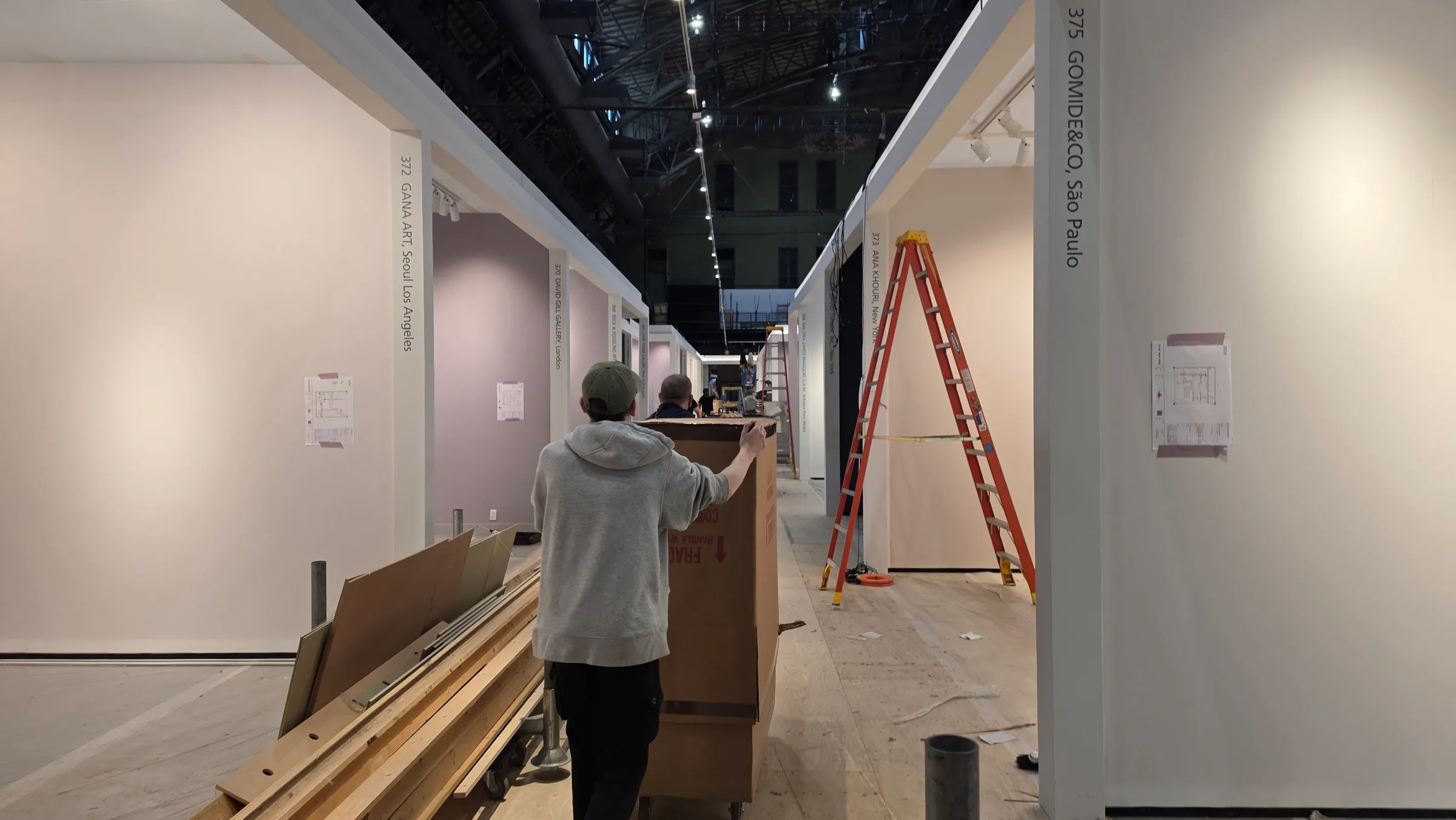
At an art fair, visitors see the artwork on display. They do not see the collection, condition check, packing, transport, storage, and carefully timed installation that brought it there—or the work required to get it safely to its next destination. A gallery may need several of those services for one exhibition, and coordinating them should not mean explaining the same project to company after company.
ArtWMS Connect brings the inquiry together. Artists, galleries, collectors, museums, and others can describe a fine art transportation or storage project once and be introduced to independent art-service companies approved by ArtWMS. A request can cover collection, packing, crating, installation, insurance, customs clearance, or several needs at once. The participating company discusses the actual work, availability, and price directly with the requester.
The work behind an art exhibition
Consider a gallery preparing for a fair. Before anything reaches the venue, an art handler may collect the work, photograph it, and record its condition. The artwork then has to be packed or crated for the journey and delivered during the fair’s assigned move-in window. Installation access is often restricted to approved crews at specific times, so a missed window can disrupt far more than the truck schedule. ArtWMS customers can keep photographs and observations with the artwork record through digital condition reporting.
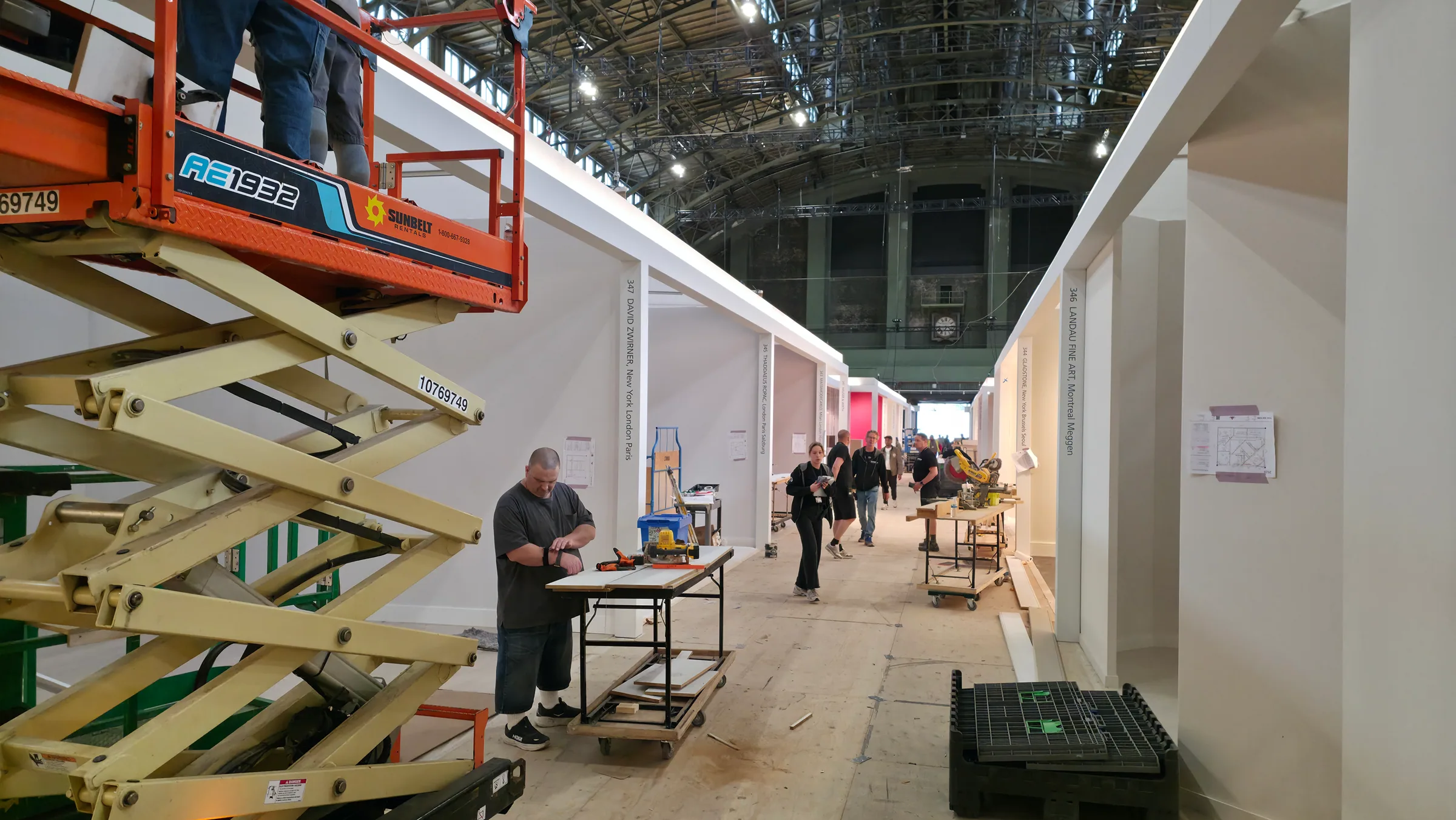
When the artwork is installed, its empty crate and reusable packing still need a place to go. At many fairs, they cannot stay on the stand. The crew may take them to a local, climate-controlled warehouse and bring them back when the approved deinstallation window opens. That is why the relationship between an artwork and its crate matters: crating management helps the art-service company keep their records and locations connected.
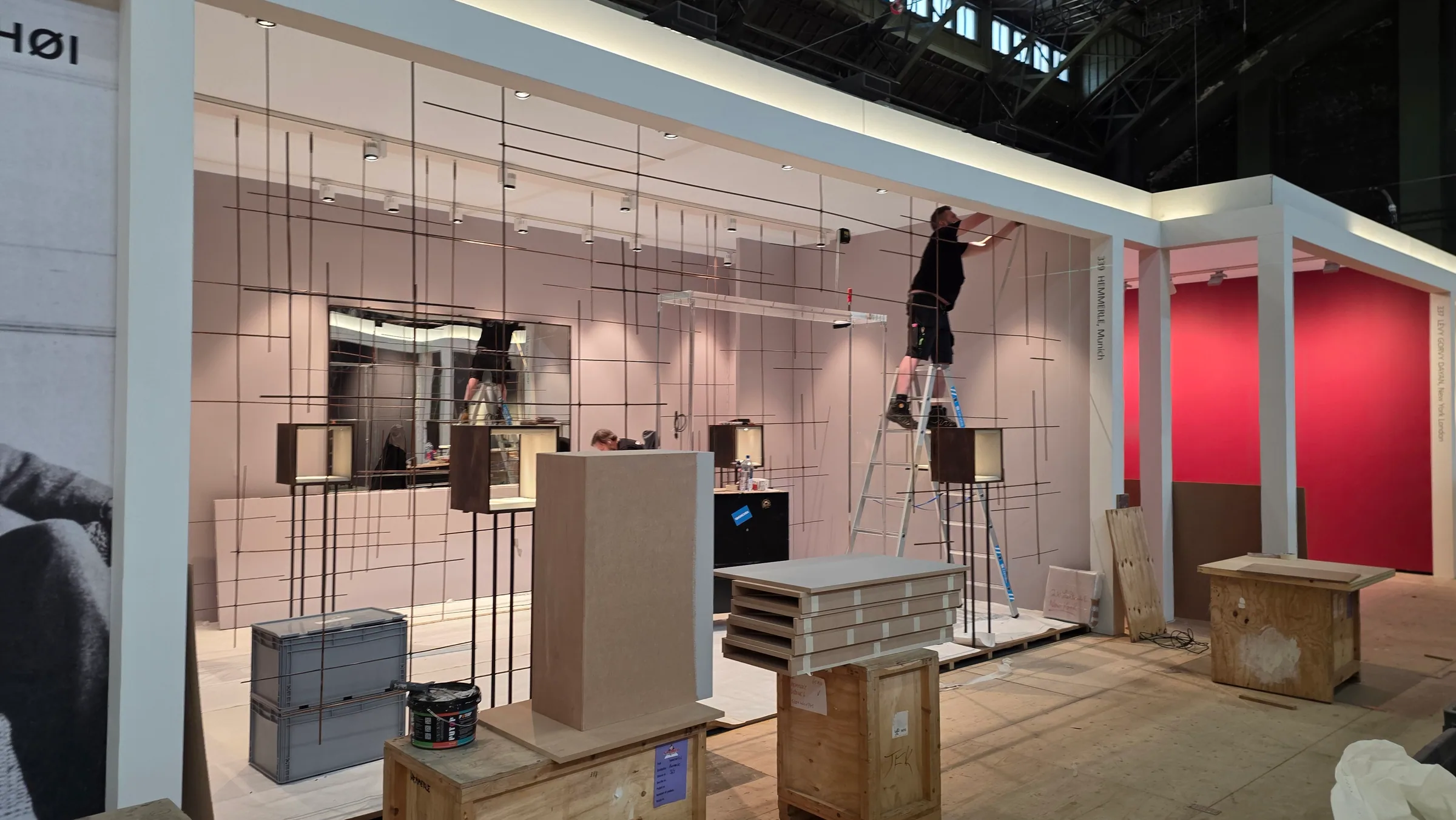
After the show, the crew checks the work and prepares it for another journey. It may return to the original customer, go into storage, travel to another exhibition, or be delivered to a buyer if it has sold. A sale may change the delivery instructions and authorized recipient; the gallery and buyer handle the sale and ownership paperwork separately. Behind the scenes, ArtWMS software for art logistics helps its customer connect jobs, work orders, condition documents, crate records, and recorded locations and movements. The artist or gallery does not have to manage every warehouse scan, but clear dates, destinations, and handling requirements still make a difference.
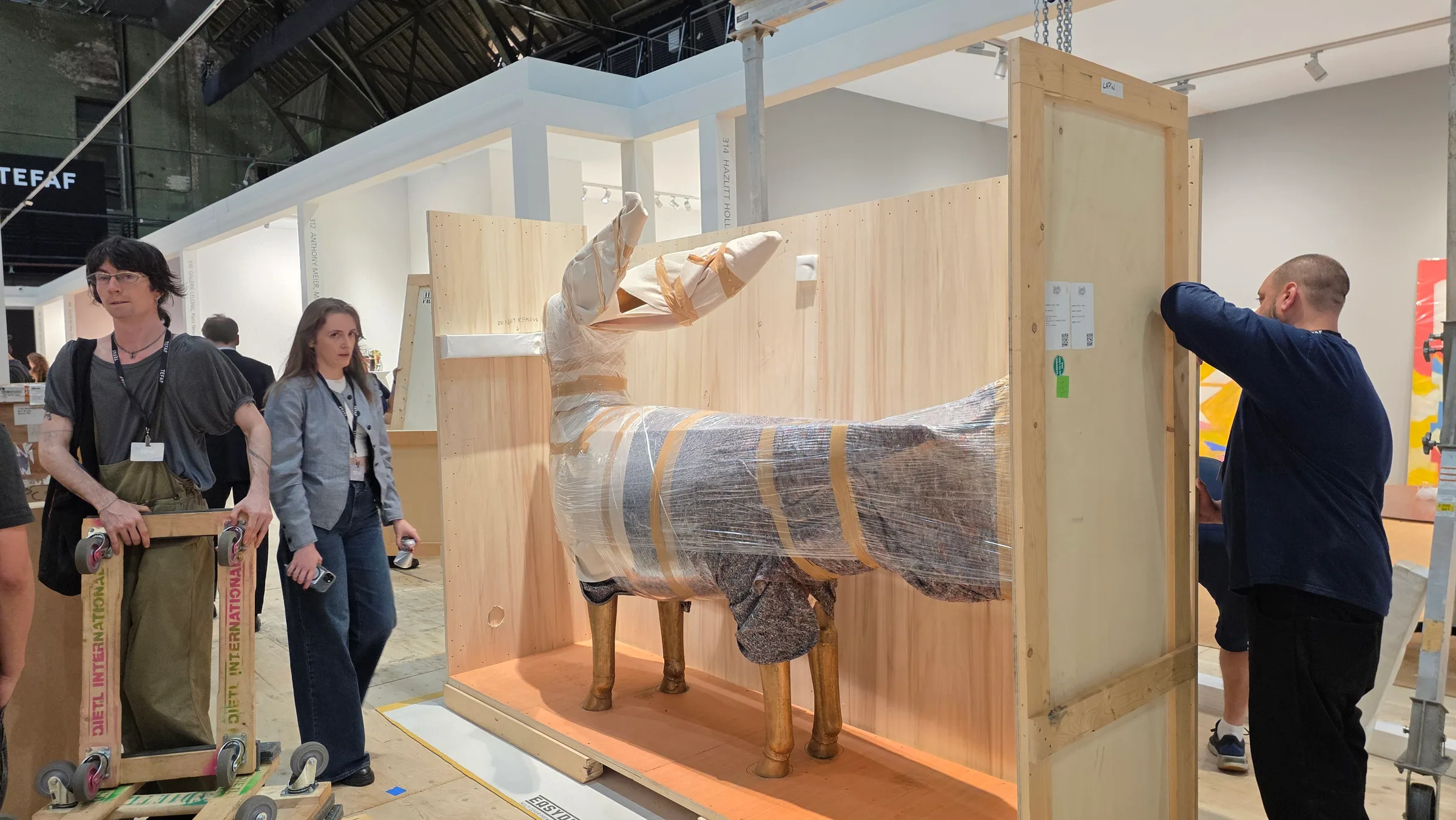
Our TEFAF New York article offers a closer look at how an ArtWMS customer coordinated an art-fair operation.
The insurance question that cannot wait
Transportation and insurance are not the same service. Asking about insurance through ArtWMS Connect opens a conversation; it does not buy a policy or establish that an artwork is covered. Some fine-art transport agreements limit the company’s liability to $0.60 per pound per item unless different terms are agreed. Applied to a 10-pound artwork worth $50,000, that limit would amount to $6. It is an example of a possible contractual liability limit—not an insurance payout, and not a rule that applies to every provider.
The important question is what the actual agreement and policy cover. Before the work moves, read the provider’s terms and speak with your insurance broker. Coverage may need to address collection, packing, transit, temporary storage, installation, the exhibition, deinstallation, and final delivery. Check the insured value, exclusions, limits, and deductibles. If a sale changes the destination, ask whether the new delivery is covered and get any required confirmation in writing.
Art logistics routes are useful, but every project is different
Independent businesses participating in ArtWMS Connect operate warehouses in locations including New York City (including Long Island City), Fort Lauderdale, Chicago, and locations in Connecticut and New Jersey. Their regular shuttle routes include New York–Florida, New York–New Jersey, New York–Chicago, and Philadelphia–New York. Participating companies also operate in the United Kingdom, Poland, Italy, and Ukraine. ArtWMS software customers are present in other European countries, but a software subscription alone does not make them ArtWMS Connect participants.
These locations and routes are examples, not a fixed service-area map. A project might involve a local pickup, an interstate shuttle, storage near the destination, or a cross-border move that requires customs clearance. The independent provider has to confirm that the work is within its capabilities and that it can meet the timing.
Art-fair seasons can change the rhythm of those routes. Around Miami Art Week 2026, November 30–December 6, we anticipate daily truck-shuttle departures across the participating companies’ combined New York, Chicago, and New Jersey operations, with more than one truck possible on some days. That is a forecast, not a confirmed timetable or a promise of a departure from every origin each day. Each company must confirm the route, space, timing, and suitability for a particular shipment.
Why ArtWMS created ArtWMS Connect
ArtWMS works with companies whose daily business is handling, storing, and moving art. We created ArtWMS Connect as a supplemental service to help those customers meet people who need their expertise. It gives requesters one place to describe a project while leaving the service relationship where it belongs: directly between the requester and the independent provider. ArtWMS does not operate the trucks or warehouses or charge either side an ArtWMS Connect fee or referral commission. The provider’s own work may still have a cost.
The inquiry begins with the services, locations, timing, a short project description, and contact details; artwork-level details are optional. Requesters can choose to hear from one, two, or three independent companies. Their inquiry and contact details go only to providers assigned to the request after they give permission. Once a provider is assigned, its sales representative can discuss the full job and confirm what the company can do and quote for it.
Participation is not automatic just because a company buys ArtWMS software. ArtWMS approves ArtWMS Connect companies separately. They must have at least two years in business, dedicated phone support, good customer reviews, and a commitment to follow up within a reasonable time. They also need to be capable of serving each assigned request within their actual services, service area, and capacity. That individual fit matters more than a broad promise to serve every route.
If an exhibition, move, or storage project is taking shape, tell ArtWMS Connect about it. The right conversation can start well before the artwork needs to move.
Reader discussion
Discussion
2 published comments
I have a moving business in Pittsburgh, PA, and recently started doing some art moving and storage. I didnt find good art transportation company willing to work within a my budget and I ended up transporting the paintings myself and spending five days in New York. Even after factoring in the road expenses, airbnb , and packing materials, it still cost me less than hiring an art logistics company to handle the show. As a bonus, I got to enjoy a few days in New York and had to pay two parking tickets totaling $370.
This is actually how alot of artist became art-handlers. Keep cary on. Looks like you killed to rabbits with one shoot
A verified email is required, and comments are reviewed before publication. The discussion service loads only after you choose to join. See the ArtWMS Privacy Policy and FastComments Privacy Policy.